
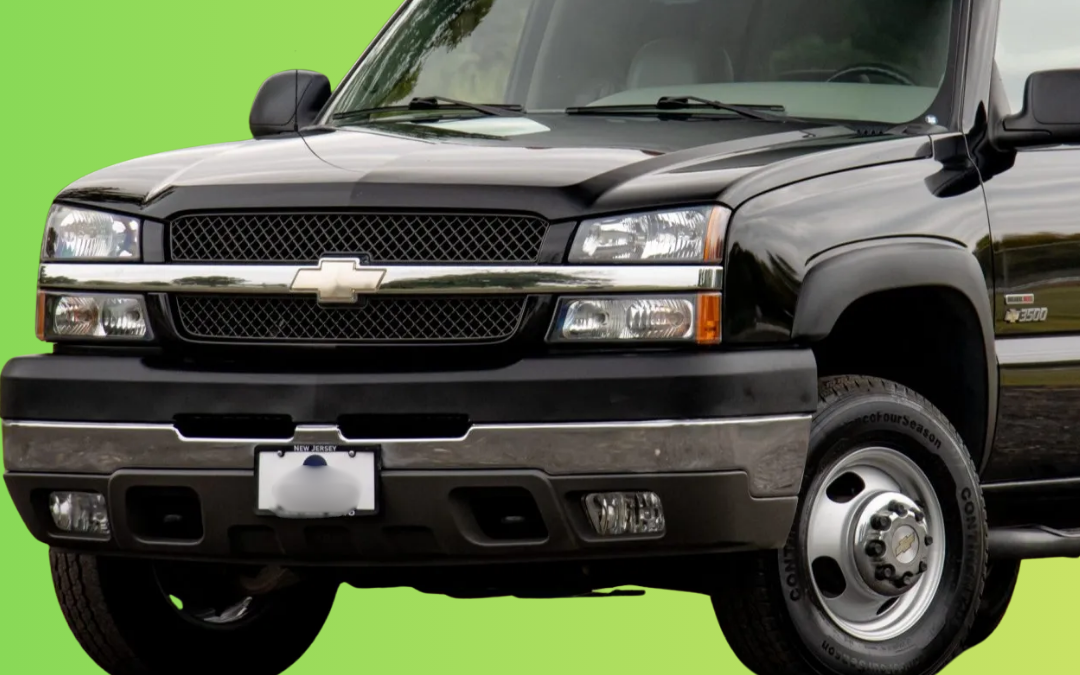
How an Edmonton Autobody Shop Extended the Life of a 2003 Silverado 3500
There is a point in almost every vehicle’s life when the question starts creeping in: Is it time to replace this thing?
Maybe there are rock chips across the hood. Rust is starting around the wheel wells. There is a dent you have ignored for three years. The bottom of the doors looks a little rougher after another Edmonton winter.
But mechanically? The vehicle still starts every morning. You know its maintenance history. You like driving it. And most importantly, it is paid for, or at least considerably less expensive than replacing it.
That is exactly the kind of situation Chris Trapp, owner of Traphouse Automotive in Edmonton, is seeing more often.
Drivers are beginning to look at autobody repair in Edmonton as more than a way to make a damaged vehicle look better. Strategic body repairs and rust prevention can be part of a much bigger goal: keeping a reliable vehicle on the road longer.
One customer’s 2003 Chevrolet Silverado 3500 is a perfect example.
Why Repairing an Older Daily Driver Can Make More Sense Than Replacing It
When the Silverado came to Traphouse Automotive, it was not a low-mileage collector truck that spent its life hidden in a heated garage.
It had approximately 411,000 kilometres on it.
Its owner had spent much of his career working as a pipeline welder, meaning the truck had experienced conditions considerably tougher than the average commute to the office. Rough roads, gravel, weather and years of regular use had all taken their toll.
Yet the Silverado was still running well.
That changed the conversation.
Instead of assuming an older vehicle needed to be replaced simply because of its age or mileage, the owner asked a much more useful question: What would it take to keep this truck going?
That question is becoming increasingly relevant to everyday drivers.
A vehicle can develop cosmetic and body issues long before its engine, transmission or other major mechanical components reach the end of their useful lives. If the vehicle is mechanically dependable, replacing the entire thing because the body is beginning to show its age may not always make financial sense.
There is also the familiarity factor.
When you have owned a vehicle for years, you know how it has been driven. You know what has been replaced. You know whether it burns oil, makes a strange noise on cold mornings or has been serviced regularly.
A newer used vehicle can sometimes come with fewer kilometres but far more unknowns.
That does not mean every old vehicle should automatically be restored. There is always a point where the cost of repairs has to be weighed against the value and condition of the vehicle.
But that decision should be based on the actual condition of the car or truck, not simply the number on the odometer.
In the case of this Silverado, the owner knew what he had. The truck worked, he liked it, and he wanted to protect it.
So that is what Traphouse helped him do.
Rock Chips, Rust Protection and the Hidden Damage Drivers Often Miss
After more than 20 years of use, the Silverado had accumulated the kind of damage you would expect from an Alberta work truck.
There were rock chips, dents and general wear from years of driving.
Rock chips can be easy to dismiss because they initially seem cosmetic. But once paint and protective coatings are compromised, exposed metal becomes far more vulnerable to moisture and corrosion.
For Edmonton drivers, that deserves attention.
Winter grime, moisture, gravel and de-icing products can be especially hard on areas of a vehicle that are already damaged.
The solution for this truck was not simply to cover everything up.
Traphouse addressed the damaged areas and removed extensive rock chipping before the vehicle received additional protection. A colour-matched bed liner was applied along the lower portion of the truck, helping create a more durable barrier in an area that regularly takes abuse from road debris.
The underside also received rust protection through Sublime Surfacing.
That underbody protection matters because some of the most vulnerable areas of a daily driver are also the areas owners rarely see.
Think about the top of a fuel tank, the areas around a spare tire, inner panels, rocker cavities and other spaces where dirt and moisture can collect.
You wash the hood because you can see that it is dirty.
You notice mud on the doors.
But few people crawl underneath their vehicle after every snowfall to check where moisture and debris are collecting.
That is why preventive products such as cavity wax can be valuable. They can be applied inside areas including doors, fenders, rocker panels and other cavities that are difficult to clean and inspect regularly.
For additional information on protecting a vehicle through Canadian winters, drivers can review CAA’s winter vehicle maintenance recommendations.
Rust prevention is not exclusively an old-truck issue either.
The same principle applies to the compact car that gets driven across Edmonton every day, the family SUV sitting outside overnight, or the crossover that spends every winter travelling the Henday.
Protecting vulnerable areas before corrosion becomes severe can be considerably easier than rebuilding large portions of a vehicle later.
When Is Autobody Repair Worth Doing on an Older Vehicle?
One of the most useful things about the Silverado project is that it challenges our idea of what “restoration” means.
Mention vehicle restoration and most people picture a 1967 muscle car sitting under bright lights at a car show.
But a growing category of restoration is far less glamorous and arguably much more practical.
It is restoring the vehicle you use every day.
That might mean replacing rusted rocker panels this year and repairing a damaged quarter panel next year. It might mean fixing stone chips before repainting a hood. It could mean repairing dents, replacing corroded panels or applying protective coatings to areas regularly exposed to road debris.
You also do not necessarily have to do everything at once.
Chris regularly sees owners approach larger projects in stages. Someone might repair the rockers first, then deal with box sides or fenders later.
Breaking a project into manageable portions can make it possible to extend the vehicle’s life without taking on one enormous restoration bill.
And that was essentially the philosophy behind the 2003 Silverado.
The owner was committed to keeping it.
When the possibility of eventually needing an engine came up, his attitude was straightforward: if that happened, he could replace the engine and continue driving the truck.
That mindset will not make sense for every vehicle or every owner. But it demonstrates why mileage alone cannot tell you whether a vehicle is “finished.”
Condition matters.
Maintenance matters.
Parts availability matters.
How much you like the vehicle matters.
And the cost of the alternative definitely matters.
There was even room to make the Silverado more personal while the work was being completed. The owner had a wolf theme incorporated into the truck, with custom airbrush work added to the hood and tailgate to complement etched rear windows.
The project ultimately became a combination of repair, protection and customization.
But the underlying objective remained remarkably practical: keep a good truck on the road.
That same philosophy can apply to a Toyota you have driven for 15 years, an older Honda commuter, a family SUV or the pickup you use for work every day.
If it is still mechanically reliable but the body is beginning to deteriorate, it may be worth finding out what can actually be repaired before shopping for its replacement.
Traphouse Automotive can assess visible damage and identify areas that may require a closer inspection. Photos are a useful starting point, but some corrosion or damage is difficult for an owner to see until the vehicle is inspected in person.
Sometimes the right answer will be to repair it.
Sometimes the numbers will say otherwise.
The important part is having that conversation before assuming age automatically means the vehicle needs to go.
For drivers considering autobody repair in Edmonton, the real question may not be, “How much is my old vehicle worth?”
A better question could be:
How much more useful life can I realistically get out of a vehicle I already know, trust and enjoy driving?
The owner of this 2003 Silverado asked that question years ago.
More than 400,000 kilometres did not automatically send the truck to retirement. With body repairs, rust protection, durable coatings and continued maintenance, it stayed where its owner wanted it.
On the road.