
Autobody Repair in Edmonton for a VW Golf
Sometimes the best automotive projects begin with a simple plan: fix the damage, clean the vehicle up, and get it back on the road. That was the idea behind this 2010 Volkswagen Golf SportWagen when it arrived for autobody repair in Edmonton at Traphouse Automotive, owned by Chris Trapp.
The car had been rear-ended in the left rear corner. It was originally purchased as a practical diesel daily driver, chosen for fuel economy and its generous interior space. The first goal was straightforward: repair the collision damage and return the vehicle to its original white finish.
But once Chris and the team began looking closely at the car, the project revealed more possibilities. What started as a repair gradually became a complete transformation, turning an ordinary used Golf into a custom summer vehicle.
For drivers considering autobody repair in Edmonton, this project is a great example of why the right shop does more than make damaged panels look better. A thoughtful repair starts by understanding what happened to the vehicle, what needs to be corrected, and what the owner ultimately wants the finished car to become.
Repairing Rear-End Damage on a Volkswagen Golf
The obvious problem was the damage at the rear of the vehicle, but the visible damage was only part of the story. The impact had also bent the suspension subframe, meaning the car needed more than cosmetic work.
A replacement quarter panel and rear hatch were sourced, and the vehicle was sent to a frame shop so the structure could be pulled back into alignment before the bodywork continued.
That first step mattered. There is little value in creating a beautiful exterior finish if the underlying damage has not been addressed properly.
This is also why a thorough inspection can change the scope of a project. I-CAR explains that collision forces can create indirect damage beyond the obvious point of impact, making a complete inspection an important part of quality repairs. Read I-CAR’s guidance on indirect collision damage
Once the major work was underway, the rest of the vehicle received a closer look. There were rock chips on the front end, door dings, and the normal imperfections that accumulate over years of driving. The hood, bumper, fenders, rear bumper, hatch, quarter panel, and door jambs were already becoming part of the refinishing process.
That raised a bigger question: if so much of the car was already being painted, did it make sense to simply return it to white?
The answer changed the entire project.
From Factory White to Custom Pearl Paint
The owner had never been especially attached to the original white finish. With much of the exterior already being repaired and refinished, changing the colour suddenly made sense.
The first choice was a medium grey based on Dodge paint code PDN. It was clean and modern, but once it was on the vehicle, it did not have quite the personality everyone wanted.
Instead of settling, the decision was made to take the finish another step.
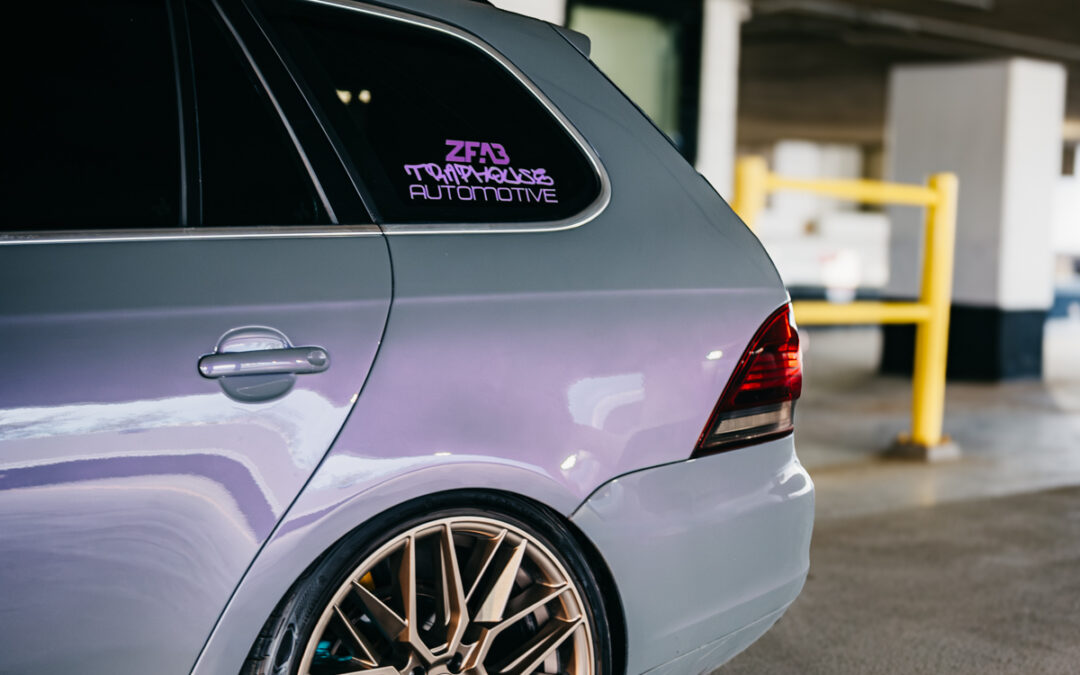
The surface was prepared again and a purple pearl was added over the grey. The result was far more distinctive. Depending on the light and viewing angle, the finish can shift from grey toward purple, giving the car a subtle colour-changing effect.
That choice also shows what makes custom paint so interesting. Pearl finishes behave differently depending on the colour underneath them. A darker base can make the pearl look stronger, while a lighter base can create a softer effect that becomes more noticeable when sunlight hits the vehicle.
The roof became another opportunity to refine the design. Because the car has a large sunroof, the roof was painted black to help the glass blend visually into the top of the vehicle. Pearl was then added to the black finish, creating a sparkling roof that complements the rest of the design.
Other details followed.
The hood notch was shaved for a cleaner front end, the rear badge was removed, and the tail lights were lightly tinted. Rather than using a fixed-shade vinyl film, the tint was created by adding black to the clear coat, allowing the final darkness to be controlled more precisely.
No single detail transformed the vehicle on its own. Together, they created a finished car that looks deliberate from every angle.
How Collision Repair Became a Custom Summer Car
The transformation did not stop with bodywork and refinishing.
Because the vehicle already needed a rear strut after the collision, the owner decided to install coilovers and lower the car. New wheels followed, arriving just before a car show.
With adjustable suspension, the ride height could be set to accommodate the wheels and bring the entire look together. In fact, the new wheels became one of those finishing touches that dramatically changed the overall presence of the vehicle.
That moment pushed the project firmly beyond its original purpose.
The vehicle had been purchased as a sensible diesel daily driver. By the end, it had become something the owner wanted to protect and enjoy rather than expose to year-round wear.
Instead of hauling dog kennels and taking on winter roads, it became a summer-only car. Another Golf eventually took over everyday driving duties.
There is an important lesson in that progression. A good body shop should help a customer understand both what a vehicle needs and what is optional.
A door ding does not automatically require a complete repaint. A few rock chips do not mean every panel needs refinishing. Some larger projects can also be divided into manageable stages rather than completed all at once.
Chris Trapp’s approach is to start with the owner’s goals, assess the vehicle, and talk through practical ways to get there. For one person, that may mean repairing only the damaged area. For another, it may be the right time to correct years of cosmetic wear.
Occasionally, as this project proves, a repair can become an opportunity to build something completely different.
The most interesting part of this story is that the final car was never fully planned at the beginning. Each decision created another opportunity to improve it, but the process still started with repairing the damage correctly.
That distinction matters. Custom touches should not distract from the fundamentals. Whether the final goal is an everyday commuter, a restored vehicle, or something built for summer car shows, good work begins with understanding the condition of the vehicle and choosing the right repair strategy.
If you have collision damage, dents, paint issues, rust, or a vehicle project you have been thinking about, Traphouse Automotive can help you explore the options. Sending photos is a useful place to start because it gives the shop an early look at the damage and helps begin a more productive conversation about the repair.
Your vehicle does not have to become a show car.
The goal is to make the repair fit the car, the budget, and what you want to see when you walk up to it.